
How to Review an Online Poker Hand History Without Chasing the Result
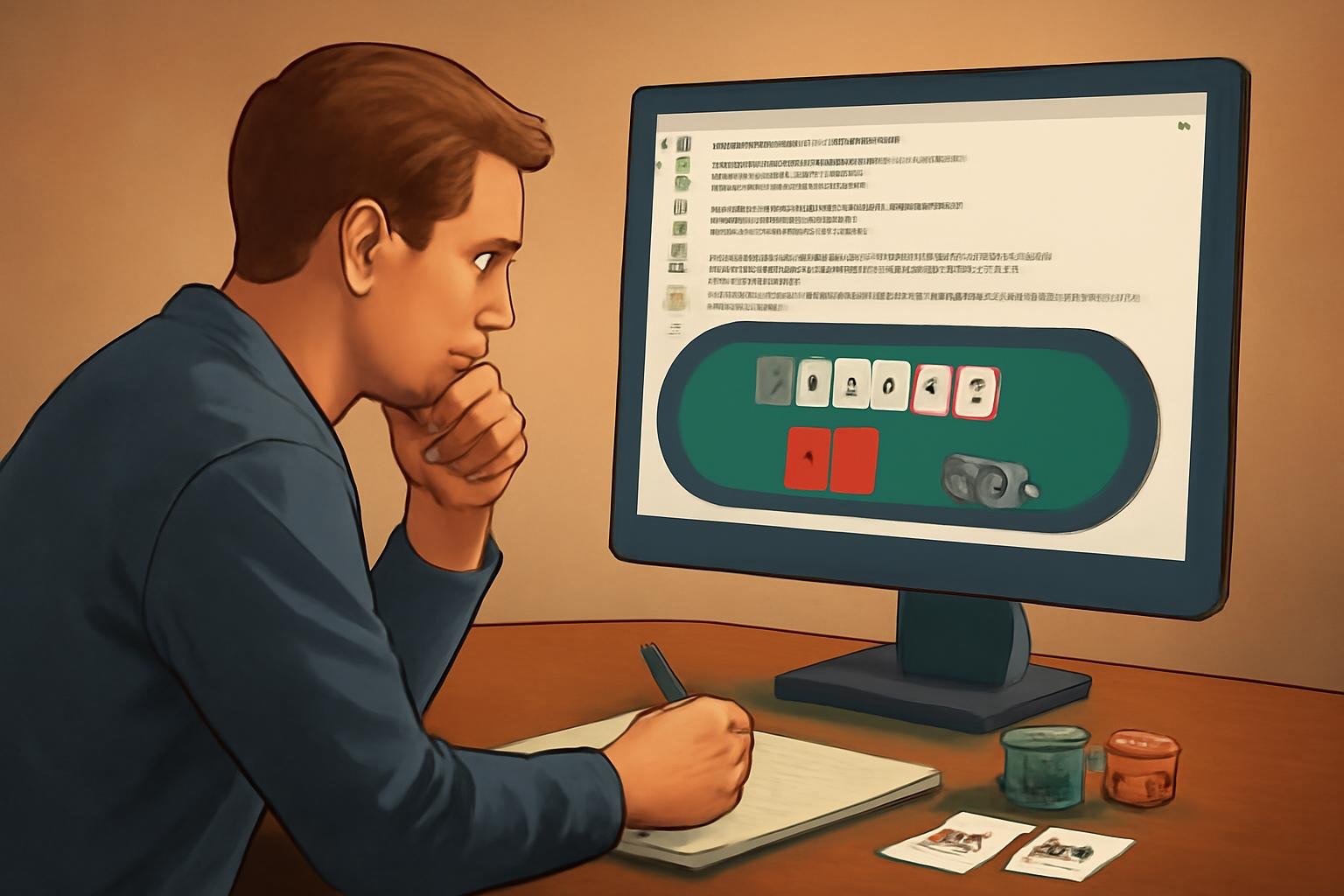
You call a bet, miss the river, and lose a sizeable pot. Was the call a mistake, or did the hand simply end badly? A hand history can help you answer that, but only if you separate the decision from the result.
Reviewing hands isn’t about proving you played perfectly or finding a trick that guarantees a win next time. It’s a way to spot decisions you can understand and improve. Here’s a practical process you can use after a session.
Start with the decision, not the showdown
Before checking who won, write down what you remember thinking at the key moment. For example: “I called because I thought the bet was small enough to continue,” or “I raised because I wanted weaker hands to call.” Keep it simple. You’re recording your reasoning, not grading yourself.
Then read the hand history from the start. Note the game format, your position, the effective stack (the smaller of the stacks that could contest the pot), and the action before you acted. These details can change what a decision means. A hand played early in a tournament, for instance, may call for a different review context than one near a major payout stage.
Rebuild the action street by street
Follow the hand in order rather than jumping straight to the last bet. At each decision, pause and ask:
- What information did I have at this point?
- What did the previous actions suggest, without assuming they revealed an opponent’s exact cards?
- What options were available, and what might each option cost?
- Did the next card change the situation, or did I treat it as more meaningful than it was?
Imagine you hold a strong pair, face a raise on the flop, and call. The turn brings a card that completes a possible draw, and your opponent bets again. Don’t judge the turn decision using the river card you now know. Assess what the turn card could mean, what the earlier action suggested, and whether your original plan still made sense.
Separate known facts from guesses
A hand history records actions and cards, not intentions. “The opponent raised twice” is a fact. “They must have a set” is a guess. Keep those categories distinct.
When you’re uncertain, list a few plausible explanations rather than settling on one. Perhaps a bet could represent a strong hand, a draw, or an attempt to apply pressure. You don’t need to pin down an opponent’s exact holding to ask whether your own choice had a clear purpose.
It also helps to check the game’s structure. In a tournament, blinds, antes, stack sizes, and the stage of play all affect the context. For a broader look at tournament formats and why their structure matters, see this introduction to online poker tournaments.
Look for a repeatable lesson
One awkward hand doesn’t establish a pattern. If the same question keeps coming up, though, it may be worth tracking. You could note that you often call large bets without deciding what you’ll do on later streets, or that you’re unsure how your position affects a decision.
Keep notes brief and neutral. “Need to review turn calls after a flop raise” is more useful than “I always play terribly.” A calmer review makes it easier to examine your habits over time, which fits the aim of playing poker more consistently.
If a hand depends on a complicated rule or unfamiliar format, check the relevant rules before drawing a strategic conclusion. And if you want to practise reading action without risking money, free poker games can provide a setting to get familiar with the flow. Practice is useful for understanding mechanics; it doesn’t predict how a paid game will turn out.
Keep the review short and useful
You don’t need to analyse every hand. Pick a few that involved a meaningful decision, a confusing spot, or a repeated concern. Give each one a short note: the decision, your reasoning, what you’d like to check, and one practical takeaway. If you can’t identify a clear question, move on.
Most of all, don’t let review become an excuse to keep playing while frustrated. Step away if you’re upset or trying to win back a loss. A useful hand review ends with a question you can investigate later, not a demand to recover money in the next session.