
France Loto Generators: Five Main Numbers and One Numéro Chance
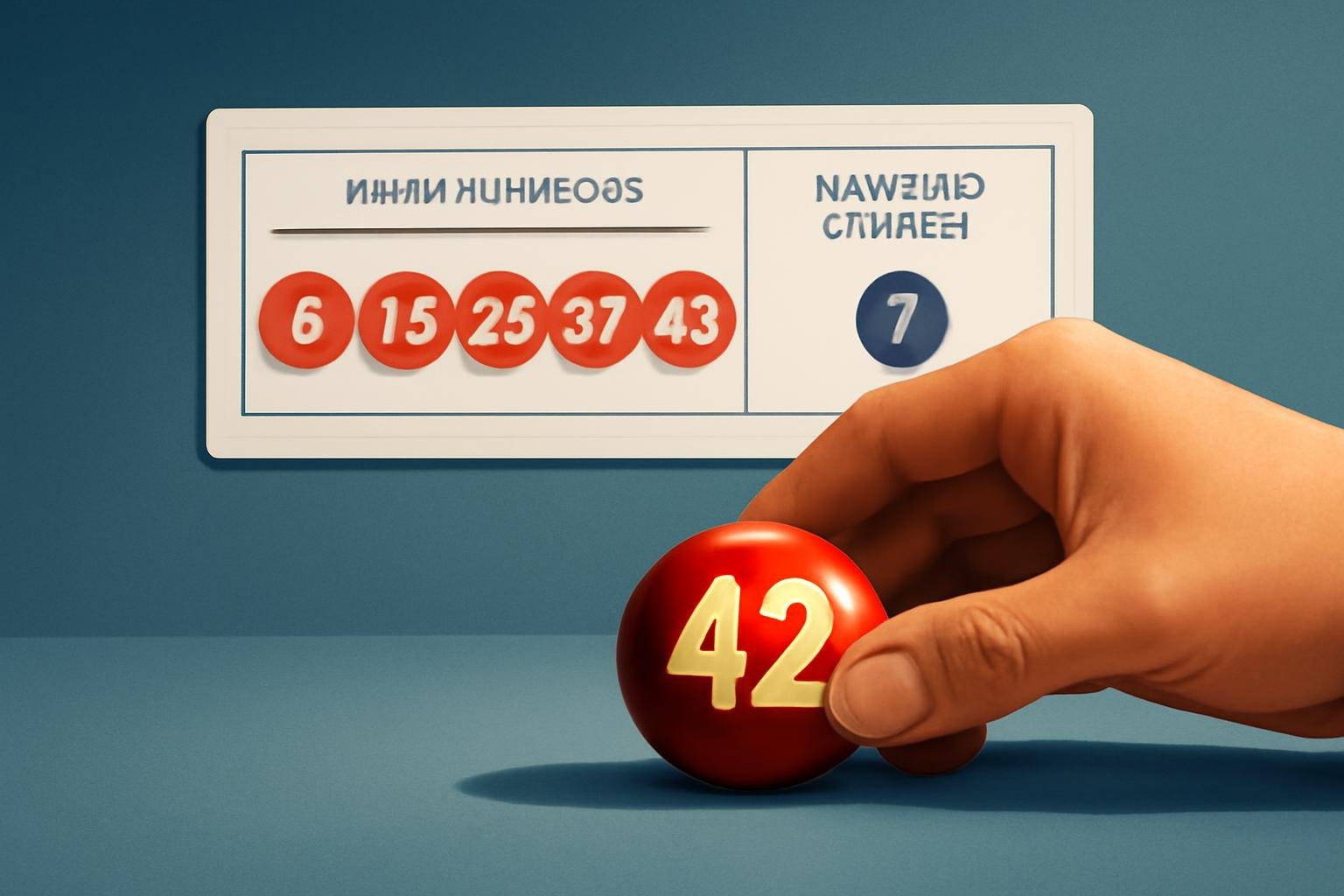
France's Loto uses a main set and a separate Numéro Chance. The French label can be translated as a chance number, but it should not be treated as an informal lucky suggestion. It is a defined part of the selection, drawn from its own field and used in the game's match conditions.
A loto (france) number generator should identify the standard structure as five distinct main values from 1 to 49 and one Numéro Chance from 1 to 10. This is different from a single six-number main field. The distinction needs to remain visible after the example is copied, printed or stored for a later demonstration.
Read the labels before counting the values
An unlabeled six-value row can hide the fact that one value has a special role. The main set contains five values, not six. The Numéro Chance should therefore be placed in a separately labelled field rather than inferred from where it happens to fall in a sorted list.
This is especially useful for readers comparing French and English terminology. A clear interface can show both the original label and a short explanation of its role. Translating the words should not change the selection logic or turn a defined field into a general claim that a particular number is fortunate.
Apply the correct range to each field
The main values must be different from one another and remain between one and 49. The Numéro Chance belongs to its own one-to-ten field. Its numeric label may also appear among the main values because the two pools are separate.
A tool should not apply a global rule requiring all six printed labels to differ. That would exclude legitimate complete selections. Equally, a value permitted in the main field may be too large for the Chance field. Correct validation is about field membership and role, not merely whether every displayed item looks like an ordinary lottery number.
Preserve the distinction in exported examples
Sorting the main five can improve readability without changing the selection. The Numéro Chance should remain outside that sorting operation. A copy that places all six values into ascending order can lose the information needed to reconstruct the intended special value.
A useful saved record includes the game name, five main values and an explicitly labelled Numéro Chance. It can also note the format for a reader who does not know the game. Colour is helpful, but the meaning should survive a plain-text view, an accessible reading tool or a printed copy with no colour.
Separate main selection from additional products
An authorized ticket may have associated options or additional draw participation under current conditions. Those features should be identified separately from the standard five-plus-one selection. A generator cannot establish that an optional feature has been accepted merely because it has produced valid main and Chance values.
The accepted entry record determines the actual draw dates and included products. A utility page can explain how an option relates to the main selection, but it should not invent a transaction status or an issued identifier. Keeping those limits explicit makes its number-generation function more useful, rather than less.
Use result checking as a separate exercise
For learning, compare a preserved example with a separately labelled hypothetical result. Count the shared main values and then check the Numéro Chance condition. This makes it possible to see why two selections with the same main overlap can have different complete match descriptions.
Do not alter the original selected values after seeing the hypothetical result. The purpose is to practice interpretation, not to turn an example into a retrospective winning line. If a real result is used, retain its game and draw information so that the comparison has a defined context.
Treat personal filters as personal filters
A generator may let readers prefer particular values or exclude patterns. Such controls can create examples that fit a person's preferences, but they do not establish a stronger chance for an individual retained selection in a fair draw. A line with consecutive main values remains one specific valid line.
A hypothetical validation exercise can use a main value of eight and a Numéro Chance also labelled eight. The roles are separate, so the shared printed label is not an error. By contrast, eleven would be outside the stated Chance field even though it could be a valid main value. These examples test the actual field rules without suggesting that any particular label is recommended.
The same applies to an apparently lucky Numéro Chance. Historical appearances do not create a requirement for the next independent result. The practical standard for France Loto generation is correct five-plus-one structure, clear terminology and faithful records. Those features prevent real selection errors while leaving accepted participation and prize conditions to the official process.